
October 10, 2026
Your Business Is Unique. Why Is Your WordPress Website Built Like Everyone Else’s?
Your business has its own customers, challenges, and way of doing things. Your website should reflect that—not force everything into a template designed for thousands of other businesses.
Imagine spending months building your business. You’ve worked on your products, refined your services, figured out your pricing, and learned what your customers actually want.
Then it’s time to build your website.
You browse a marketplace, find a premium WordPress theme with an impressive demo, pay for it, install it, and start replacing the placeholder content.
A few days later, your website looks professional.
But there’s a problem you might not notice immediately.
The layout was designed before anyone knew your business existed. The navigation was created without understanding your customers. The features were chosen by a theme developer trying to appeal to as many buyers as possible.
You have a website, certainly. But is it a website built around your business?
That’s the question worth asking.
Because there’s a meaningful difference between having a WordPress website and having a WordPress website developed specifically for the way your business works.
And as your business grows, that difference can become increasingly important.
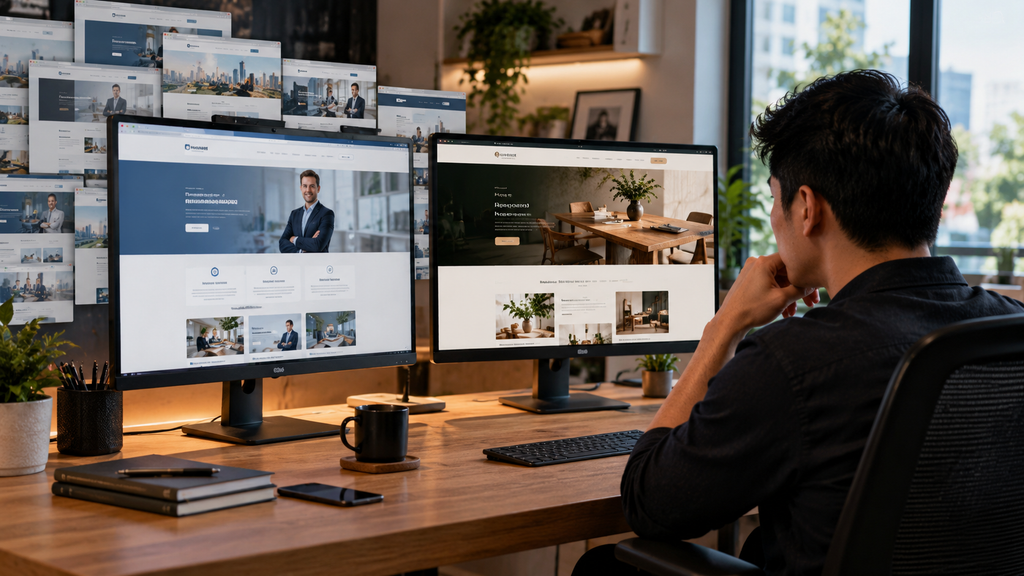
1. The Problem Isn’t WordPress. It’s the One-Size-Fits-All Approach.
WordPress is an incredibly flexible content management system. It can power a simple business website, a publication, a membership platform, or a sophisticated WooCommerce store.
What makes WordPress useful isn’t just its collection of themes and plugins. It’s the ability to extend and customize the platform.
Yet many businesses never get to experience that flexibility.
Instead, they purchase a ready-made theme and build their entire online presence around whatever the theme allows.
Need a different product layout? Look for an option in the theme settings.
Want a custom booking workflow? Find another plugin.
Need your website to connect with an internal business system? Hopefully, there’s an integration available.
Want to change something the theme developer never anticipated? That’s where things can get complicated.
None of this means premium WordPress themes are inherently bad. Some are exceptionally well-developed, maintained, and documented.
The issue begins when the theme becomes the thing that determines how your business operates online.
Your website should adapt to your business requirements. Your business shouldn’t have to adapt to your website’s limitations.
That distinction is one of the strongest reasons to consider custom WordPress website development.
2. A Premium Theme Is Designed to Sell to Thousands of Businesses
Think about how a commercial WordPress theme is developed.
The creator doesn’t know whether the buyer operates a dental clinic, an accounting firm, a construction company, or an online clothing store.
So the theme needs to accommodate many possibilities.
It might include dozens of homepage layouts, multiple header designs, animation systems, portfolio templates, product display options, and integrations with popular page builders.
From a marketing perspective, that makes sense. More features can make the theme attractive to a larger audience.
But from your business’s perspective, how many of those features do you actually need?
Perhaps you run a small consulting company. Your website needs five well-designed pages, a clear explanation of your services, client testimonials, and a reliable inquiry form.
You don’t need twenty homepage variations.
You don’t need an elaborate animation library.
You don’t need a complicated visual builder just to update a paragraph.
You need a website that helps potential clients understand what you do and makes contacting you straightforward.
With custom WordPress theme development, the starting point can be entirely different.
Instead of asking, “Which available theme layout looks closest to what we need?” the developer asks:
“What does this business need its website to accomplish?”
The design, functionality, content structure, and technical implementation can then follow that answer.
3. A Beautiful Theme Demo Doesn’t Tell You How Your Website Will Perform
Premium theme demonstrations can be impressive.
They often feature carefully selected photography, polished typography, professional layouts, and perfectly arranged sample content.
Everything looks balanced.
But the demo isn’t your actual website.
Once you replace those photographs with your own, add your real content, install additional plugins, and introduce business-specific requirements, the result can look and behave quite differently.
You might discover that a section only looks right with a particular image size. Or that your service descriptions don’t fit neatly into the available cards.
Sometimes the theme’s visual structure encourages you to shorten important information simply because the layout wasn’t designed to accommodate it.
That’s not how business communication should work.
Your content should explain your value clearly. The design should support that explanation.
A custom WordPress website allows the layout to be developed around your actual services, products, brand identity, and customer journey.
For example, a business offering complex professional services may benefit from detailed service pages, industry-specific case studies, and a multi-step project inquiry form.
A local home services company might need prominent contact information, service-area pages, trust indicators, and a straightforward quote request.
An online retailer may need product filtering, specialized product information, and a checkout process that supports its fulfillment model.
These businesses shouldn’t necessarily share the same website structure simply because they all use WordPress.
4. Website Performance Is About More Than Choosing a Fast Theme
Website speed matters.
People don’t enjoy waiting for pages to load, especially when they’re browsing on a mobile connection.
A slow website can interrupt the customer journey before someone has even had a chance to understand what you offer.
This is where the discussion about custom WordPress development versus premium themes often becomes oversimplified.
You’ll sometimes hear that premium themes are slow and custom themes are fast.
That’s not necessarily true.
A well-developed premium theme can perform extremely well. A poorly developed custom theme can be unnecessarily heavy, inefficient, and difficult to maintain.
The difference is in how the website is engineered.
A custom development approach gives the developer more control over what gets included.
If your website doesn’t require a large animation library, there’s no reason to introduce one merely because it comes bundled with a theme.
If a page only needs a simple contact form, there’s little benefit in loading a collection of unrelated features.
If your design requires a specific interactive element, it can be implemented with an appropriate amount of code rather than relying automatically on a large multipurpose extension.
A performance-focused custom WordPress website can be developed with attention to:
- Efficient CSS and JavaScript loading
- Properly sized and compressed images
- Responsive images for different screen sizes
- Appropriate caching strategies
- Optimized database queries
- Reduced unnecessary dependencies
- Accessible, semantic HTML
- Mobile-first layouts
- Core Web Vitals and real-user performance
Of course, hosting quality, third-party scripts, content, and ongoing maintenance also affect the final result.
Custom development doesn’t automatically guarantee a faster website. It gives you the opportunity to build a more focused one.
And when that opportunity is handled properly, the benefits can be substantial.
5. The Hidden Cost of Making a Theme Do Something It Wasn’t Built to Do
Let’s say you purchase a premium WordPress theme for $59.
At first glance, that’s an attractive price.
You get a professional-looking design, ready-made templates, and a collection of customization options.
For some businesses, that’s all they need.
But suppose your requirements change.
You want customers to complete a detailed project assessment before requesting a quote.
Your theme doesn’t support that process.
You install a form plugin.
Then you need conditional fields and multiple steps, so you purchase an extension.
Later, you want the submitted information to trigger a particular internal workflow.
That requires additional customization.
Eventually, you need to modify how the form integrates with your customer management system.
Now you’re paying a developer to connect several components that were never originally designed to work together.
The initial theme price hasn’t changed. But the total cost of achieving your business requirements has.
This is where business owners should look beyond the purchase price.
The real cost of a WordPress website includes development, customization, licenses, hosting, maintenance, updates, troubleshooting, and future improvements.
A premium theme may still be the more economical choice. However, the more you need to work around its limitations, the less straightforward that calculation becomes.
Custom WordPress development can sometimes reduce those workarounds by building the required functionality directly into the project.
That doesn’t mean custom websites eliminate maintenance expenses or third-party software.
They don’t.
But they can provide a clearer technical foundation when the requirements are sufficiently specialized.
6. Your Business Workflow Deserves More Than Another Plugin
Here’s a situation that comes up frequently in WordPress development.
A business owner needs something that sounds simple.
Maybe they want different minimum order amounts depending on a customer’s country.
Perhaps their WooCommerce store needs a custom approval process before certain orders can proceed.
Or they want customers to submit detailed project requirements, receive a reference number, and follow a specific communication process.
The first instinct is often to search for a plugin.
Sometimes that’s exactly the right solution.
But what happens when the available plugin handles only 80% of the requirement?
You could change your workflow to match the plugin.
You could install another plugin to fill the gap.
Or you could develop the missing functionality around the way your business actually operates.
This is where custom WordPress plugin development becomes particularly valuable.
A purpose-built plugin can support requirements such as:
- Specialized WooCommerce checkout rules
- Custom product pricing and ordering logic
- Customer or member dashboards
- Role-based permissions and approval workflows
- Automated business notifications
- Third-party API integrations
- Custom reporting and administrative tools
- Industry-specific forms and data management
The goal isn’t to replace every existing plugin with custom code.
That would often be unnecessary and expensive.
The goal is to use established software where it makes sense and develop custom functionality where your business has requirements that standard tools don’t adequately address.
A good WordPress developer should be able to explain when an existing plugin is sufficient and when custom development is justified.
You shouldn’t have to pay for custom code simply because it’s possible to write it.
7. A Custom WordPress Website Can Make Everyday Management Easier
Business owners don’t usually want to spend their afternoons adjusting padding, fixing layouts, or figuring out why a page looks different on mobile.
They want to update their services, publish content, manage products, and respond to customers.
That’s why the WordPress administration experience deserves as much attention as the public-facing website.
A ready-made theme may provide hundreds of configuration options.
That sounds powerful until you only need to change one small thing and can’t remember which settings panel controls it.
With custom WordPress development, the editing experience can be tailored to the people who will actually manage the website.
For example, imagine a business website with a services section.
Instead of manually editing a complicated page layout whenever you introduce a new service, your developer could create a structured service management system.
You add the service name, description, image, pricing information, and relevant details.
The website displays that information using the existing design.
No need to rebuild the layout.
The same approach can be applied to testimonials, team members, portfolios, case studies, product specifications, and other recurring content.
This is one of the less visible advantages of a well-planned custom WordPress website.
The website isn’t only easier for customers to use. It can also become easier for your team to manage.
And that matters long after the original development project has been completed.
8. What Happens When Your Business Outgrows Its Website?
Your business today may look quite different three years from now.
You might introduce new services, expand into another market, add online payments, hire employees, or develop an entirely new revenue stream.
Your website should be able to evolve with those changes.
A premium WordPress theme can often support significant growth, especially when it follows WordPress development standards and works well with established plugins.
But challenges can arise when essential business functionality becomes tightly connected to a theme’s proprietary features.
For example, switching themes may become more difficult if your content depends heavily on theme-specific shortcodes or custom layout components.
A carefully planned custom WordPress architecture can help avoid that problem.
Content, design, and business functionality can be separated where appropriate.
Reusable components can make new pages easier to build.
Custom functionality can live in dedicated plugins rather than being embedded entirely in the theme.
Developers can extend existing features without rebuilding unrelated parts of the website.
None of this happens automatically just because a website is custom-built.
It requires thoughtful architecture, documentation, testing, and maintainable code.
But when those foundations are in place, future development can become more predictable.
That’s an important consideration for any business expecting its digital requirements to grow.
9. Custom WordPress Development vs. Premium Themes: What’s the Real Difference?
The right choice depends on what you’re trying to achieve.
Here’s a practical comparison.
| Consideration | Premium WordPress Theme | Custom WordPress Development |
|---|---|---|
| Initial investment | Usually lower | Usually higher |
| Time to launch | Often faster | Depends on project scope |
| Design flexibility | Based on theme capabilities | Can be designed around specific requirements |
| Business workflows | May require additional plugins | Can be developed around the workflow |
| Performance | Depends on theme, plugins, and configuration | Depends on implementation and optimization |
| Content management | Often uses general-purpose editing tools | Can provide tailored editing interfaces |
| Ongoing maintenance | Theme and plugin updates | Custom code plus platform and dependency maintenance |
| Future changes | Depends on architecture and theme limitations | Can be planned for extensibility |
| Best suited for | Standard requirements and tighter budgets | Specialized needs and long-term customization |
Notice that neither option wins every category.
That’s intentional.
Choosing between a premium WordPress theme and a custom-built website shouldn’t be treated as a contest where one approach is always superior.
It’s a business decision.
The question is whether the solution matches your requirements, budget, timeline, and expectations for the future.
10. When a Premium WordPress Theme Is Actually the Better Choice
Custom development isn’t necessary for every business.
If you’re launching a simple website with a limited budget, a reputable premium theme may be an excellent starting point.
Consider a small business that needs a homepage, about page, services page, contact form, and a few blog articles.
If a well-maintained theme already supports the required design and functionality, building everything from scratch might not provide enough additional value to justify the cost.
A premium theme may also make sense when:
- You need to launch quickly.
- Your website requirements are fairly standard.
- You have a limited initial budget.
- You don’t need specialized integrations or workflows.
- You’re comfortable working within an established design system.
The important thing is choosing the theme carefully.
Look at its update history, compatibility, documentation, support, accessibility, and performance.
Avoid selecting a theme solely because its demonstration includes dozens of attractive effects.
And before committing, consider whether it can accommodate your actual content and likely future requirements.
A good developer should be willing to recommend a premium theme when it’s genuinely the right solution.
11. When Custom WordPress Website Development Becomes Worth the Investment
Now consider a different business.
Its website isn’t simply an online brochure.
It’s responsible for generating qualified leads, supporting customers, processing specialized orders, integrating with business software, or managing workflows that directly affect operations.
In that situation, the website becomes more than a collection of pages.
It becomes part of how the business functions.
That’s when investing in a custom WordPress website may make more sense.
Custom development is especially worth considering when:
Your brand needs a distinctive online experience.
You don’t want to build your identity around a design shared by thousands of other websites. You need a layout and user experience that reflect your particular audience and services.
Your website has specific functional requirements.
You need something beyond standard pages, forms, and product listings.
Your existing theme requires constant workarounds.
Every new feature seems to involve another plugin, additional customization, or a compromise.
You want greater control over the technical foundation.
You need an architecture that supports maintainability, performance optimization, and future development.
Your website plays a significant role in generating revenue.
Improving the customer journey, inquiry process, or purchasing experience could have a meaningful impact on business results.
A custom WordPress website is not automatically the right investment simply because a business is established or successful.
But when the website has an important operational role, designing it around the business can become a practical advantage.
12. What Should You Expect From a Professional Custom WordPress Developer?
Hiring a developer shouldn’t begin with choosing colors and homepage animations.
It should begin with understanding your business.
What do you offer?
Who are your customers?
What actions do you want visitors to take?
What isn’t working on your current website?
Which tasks do you want to simplify?
What features are essential now, and which ones can wait?
These questions help determine whether you actually need a custom theme, a custom plugin, modifications to an existing website, or a combination of solutions.
Once the requirements are clear, the developer can recommend an appropriate approach.
For a custom WordPress website, that process may involve:
- Discovery and requirements: Understanding your business, target audience, objectives, and technical needs.
- Website structure and planning: Defining pages, navigation, content types, and customer journeys.
- Design and user experience: Creating responsive interfaces that support your brand and make important actions easy to find.
- Custom development: Building the theme, components, and required functionality using WordPress development practices.
- Testing and optimization: Checking functionality, mobile usability, accessibility, performance, and browser compatibility.
- Launch and handover: Deploying the website, verifying its operation, and explaining how to manage it.
Not every project requires the same process or level of complexity.
A small custom website may have a relatively straightforward development cycle.
A WooCommerce store with specialized ordering rules, payment integrations, and custom dashboards will naturally require more planning and testing.
The key is to agree on the scope before development begins.
You should understand what you’re paying for, what will be delivered, and which requirements would count as additional work.
13. Why Working Directly With Your WordPress Developer Matters
There’s another consideration that doesn’t always appear in theme comparisons: communication.
A website project involves many small decisions.
How should a particular form behave?
What happens when a customer enters incomplete information?
Should a certain feature be available to every user or only specific account roles?
How should the website handle an unusual order scenario?
These details can affect the final experience just as much as the design.
When you work directly with the developer responsible for implementation, you can discuss those questions with the person who understands how the website will actually be built.
That doesn’t mean an agency or larger development team can’t provide excellent service.
Many do.
But direct communication with an independent WordPress developer can be especially useful for businesses that value a consistent technical contact and a straightforward working relationship.
You can explain the requirement, discuss the trade-offs, and understand the proposed solution without unnecessary layers of communication.
For smaller businesses and specialized projects, that can make the development process easier to manage.
14. How Ihalweb Approaches Custom WordPress Development
At Ihalweb, the focus is on custom WordPress websites, WooCommerce development, and purpose-built WordPress plugins.
The approach is straightforward: understand the requirement first, then recommend the solution that fits.
Sometimes that means developing a custom WordPress theme with a responsive design, carefully structured content, and only the functionality the website needs.
Sometimes it means extending WooCommerce to support a specific ordering process or business rule.
Other times, it means developing a standalone WordPress plugin to solve a problem that existing tools don’t adequately address.
And when a reliable existing solution already meets the requirement, there’s no reason to rebuild it simply for the sake of calling it custom.
The objective isn’t to write as much code as possible.
It’s to create a practical, maintainable solution that supports the business.
Ihalweb also offers defined development packages, allowing businesses with smaller projects to start with a clear scope and price.
For requirements that fall outside those packages, the first step is to discuss the project and determine what’s actually needed.
Whether you’re planning a new business website, improving an existing WooCommerce store, or developing specialized WordPress functionality, the conversation starts with your goals.
Not with a theme demo.
15. Frequently Asked Questions About Custom WordPress Development
Is a custom WordPress website better than a premium theme?
Not always. A custom WordPress website can be a better choice when your business needs a distinctive design, specialized functionality, or a tailored content management experience. A premium theme can be more practical for standard websites with limited budgets and straightforward requirements.
Is custom WordPress development more expensive?
Custom development generally has a higher initial cost because the website or functionality is designed and implemented for specific requirements. However, the long-term cost depends on maintenance, extensions, licensing, future changes, and how well the original solution fits your business.
Will a custom WordPress website load faster?
It can, particularly when the developer carefully controls assets, dependencies, queries, and frontend behavior. But speed depends on implementation, hosting, content, and third-party services. Custom development alone does not guarantee excellent performance.
Can I manage a custom WordPress website myself?
Yes. A properly developed custom WordPress website can include an editing experience designed around your needs. You can manage pages, posts, services, products, and other structured content without modifying source code, depending on how the website is built.
Can I add WooCommerce to a custom WordPress website?
Yes. WooCommerce can be integrated into a custom WordPress website. Developers can also create custom store layouts, product interfaces, checkout rules, and other functionality when the business requires them.
Do I need a custom WordPress plugin as well as a custom theme?
Not necessarily. Themes primarily handle presentation, while plugins are generally better suited for functionality that should remain independent of the site’s appearance. A developer can determine whether your requirements belong in the theme, a plugin, or an existing third-party solution.
Is it possible to convert an existing WordPress website into a custom website?
Yes, but the appropriate approach depends on the existing site’s architecture. Some websites can be improved incrementally, while others may benefit from a theme rebuild or a more comprehensive redevelopment. Existing content, SEO URLs, customer data, and integrations should be carefully assessed before making major changes.
Final Thoughts: Build Around Your Business, Not Around a Demo
There’s nothing wrong with starting with a premium WordPress theme.
For many businesses, it’s an affordable and sensible way to establish an online presence.
But a ready-made theme shouldn’t automatically be the long-term answer to every website requirement.
Your business has its own customers, processes, challenges, and opportunities.
The more important your website becomes to your operations, the more valuable it may be to have a solution designed around those specific needs.
A custom WordPress website isn’t valuable merely because its code was written from scratch.
It’s valuable when the design helps visitors find what they need, the functionality supports your workflow, and the underlying system remains manageable as your requirements change.
That’s what separates meaningful custom development from customization for its own sake.
Your business wasn’t built from someone else’s template. Your website doesn’t always have to be, either.
Thinking About a Custom WordPress Website?
If your current WordPress theme is limiting what you can do—or you’re planning a new website and want to make the right technical decisions from the beginning—Ihalweb can help you evaluate your options.
Whether you need a custom business website, WooCommerce functionality, or a purpose-built WordPress plugin, you can start by explaining what you’re trying to achieve.
Get a free website project assessment from Ihalweb.
Share your requirements and receive a practical recommendation about the next step.
Request Your Free Project Assessment
No obligation. No unnecessary sales process. Just a conversation about what your business needs.